William Teasdale 1906-1973

The beginning
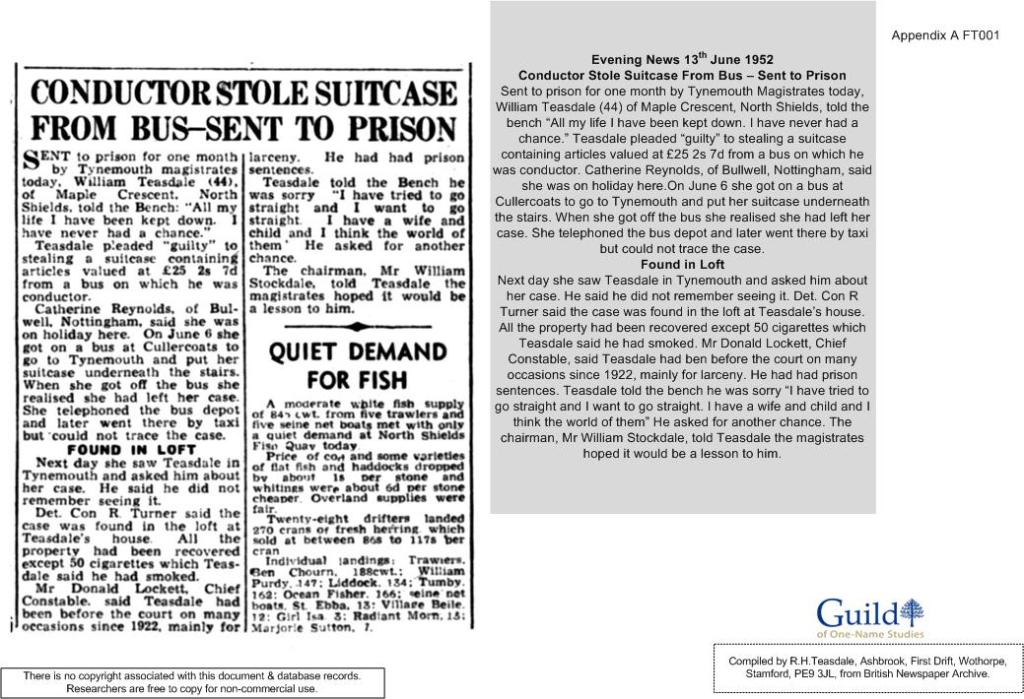
William Teasdale spent most of his life in and out of prison. Growing up, I heard rumours about someone in the family who had been in prison but it was not until I carried out research that I realised who he was and the extent of his activities. Some of these are described in newspaper articles and are recorded in this document. William died in 1973 and at that time my wife & I were living about three miles from him and his wife Georgina Eveline Teasdale, nee Anderson. At that time I had not discovered the benefits of family history and had no knowledge or interest in my father’s siblings.
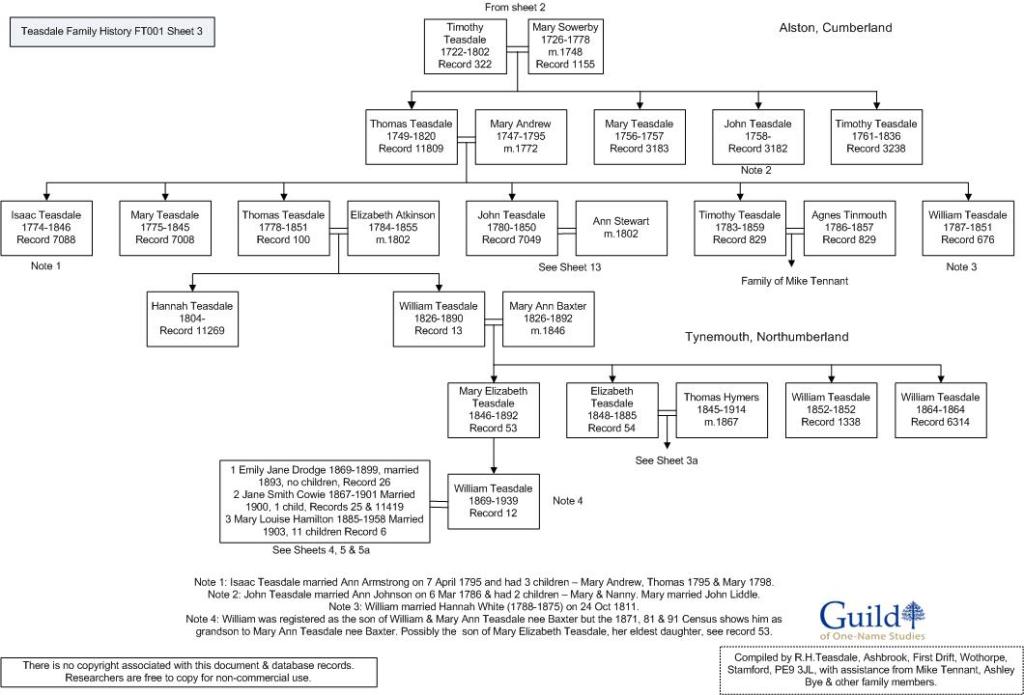
William’s father was married three times, his first two wives died before he married my grandmother Mary Louise Hamilton in 1903. He was the illegitimate son of Mary Elizabeth Teasdale 1846-1892. We don’t know who the father was but I’m sure there was something in his DNA that affected the children who came after.
Some history.
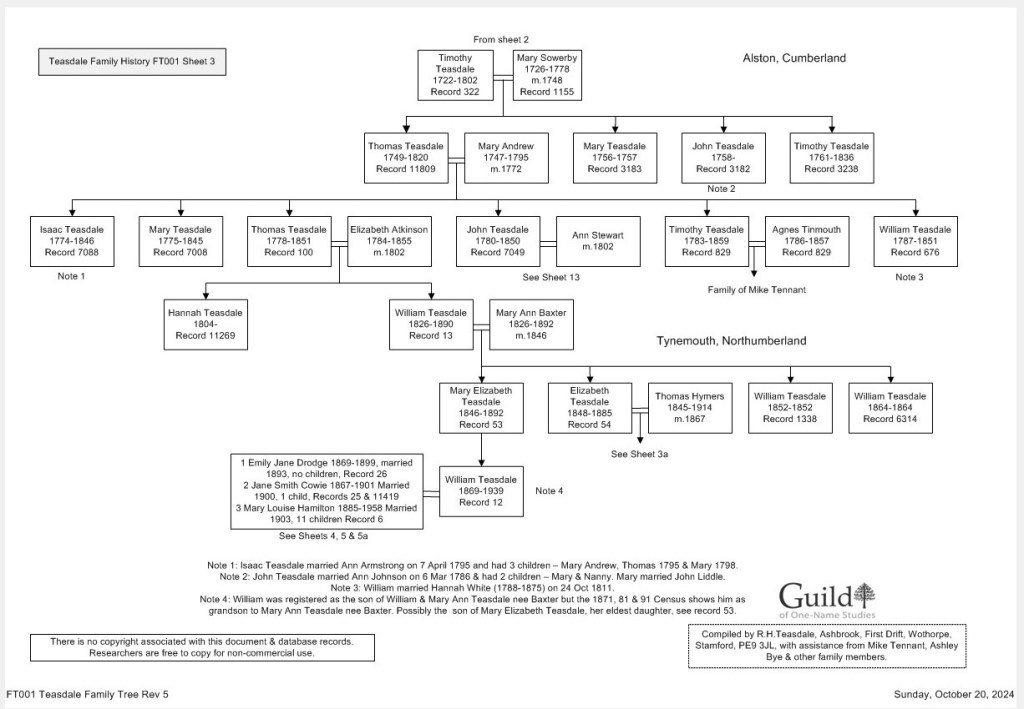
William Teasdale 1826-1890 married Mary Ann Baxter 1826-1892 in 1846. They had four children – Mary Elizabeth 1846-1892, Elizabeth 1848-1885, William 1852-1852 & William 1864-1864. This William Teasdale can trace his lineage back to the Teasdale families from Alston. According to civil registration William & Mary Ann had another son called William 1869 but he is shown on census returns as their grandchild. Mary Ann would have been aged 43 at the time of the 5th child. Informing the registrar that the baby belonged to Mary Ann could have been done by the father, so the registrar would not see her, thus avoiding any scandal. However the census enumerator was probably a local man and could see that the child was a grandson but his mother was not recorded as such. It looks like the eldest daughter had an illegitimate child called William 1869-1939 with an unknown father. This son William married Mary Louise Hamilton who I remember from my holidays in Keswick.
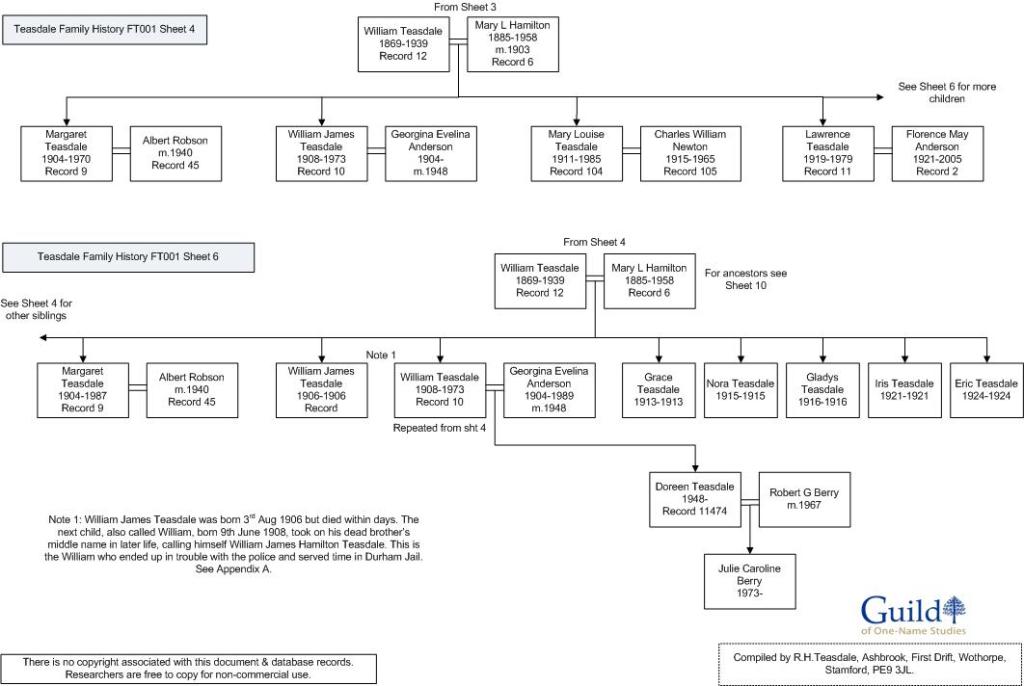
William and Mary Louise had twelve children, six of whom died at birth. The second oldest child William 1908-1973 is the subject of this document. The fourth child was my father Lawrence.
DNA
None of the male descendents from William Teasdale and Mary Louise can trace a direct Y chromosome link through the male line to the Alston Teasdales. The Y-chromosome is found only in men, and is one of the sex chromosomes. A male has an X and a Y sex chromosome, making them male. The Y chromosome is from the father and the X chromosome is from the mother. A female has two X chromosomes, one from her father and one from her mother. mtDNA Follows the direct female line, which is the child, the mother, her mother, and back in time. Both males and females inherit mtDNA, though only females pass it on.
Understanding Illegitimacy in Family History Research

Between 1837 and 1965 about 4% to 7% of children were illegitimate. In the early 18th century, the rate was probably lower at around 2%. It was common in earlier centuries for a couple to marry only after the girl became pregnant or even after she produced a child. Children were a guarantee of support for the parents in later life who could end up destitute on parish handouts. The dreaded workhouse became available in the nineteenth century. The identity of the parents in these cases was recorded and the child was recorded as legitimate. If your ancestor was born to an unmarried woman the parish register may not have identified the father. If a father is not named in a parish register, other records may be available. Parish overseers wanted to know who he was so they could make him liable for maintenance. Neighbours & villagers in the 16th to 19th centuries usually knew who the father was and this could recorded in parish or Justice’s records. A statute in 1610 provided that mothers of bastards could be sent to a house of correction for up to a year & were often whipped. Many of us today, researching our family trees, are likely to find illegitimacies and my own family is no exception. From 1869 all our Teasdale family tree is derived from Mary Elizabeth Teasdale 1846-1892. She had an illegitimate child, William born 1869 & he was registered as the child of Mary’s parents William & Mary Ann Teasdale, nee Baxter. I thought all was normal until one day I examined the census returns for 1871, 81 & 91, only to find William born 1869 was described as the grandson of William & Mary. You need to bear in mind that the civil registrar near the town hall was usually anonymous but the census enumerators visiting your home were recruited from the local population. I have correspondents whose families were broken up & the child adopted, right up to the 1950s. We think nothing of illegitimacy now, it is relegated to history where it belongs. We must be aware of pre-judging our ancestors with our modern outlook.

Researching your family tree for free – getting started

Many people assume that you must buy a subscription to one of the genealogy websites in order to start researching your family. You don’t have to spend much to get started. All you need is a pencil, paper and an eraser which you may have already.

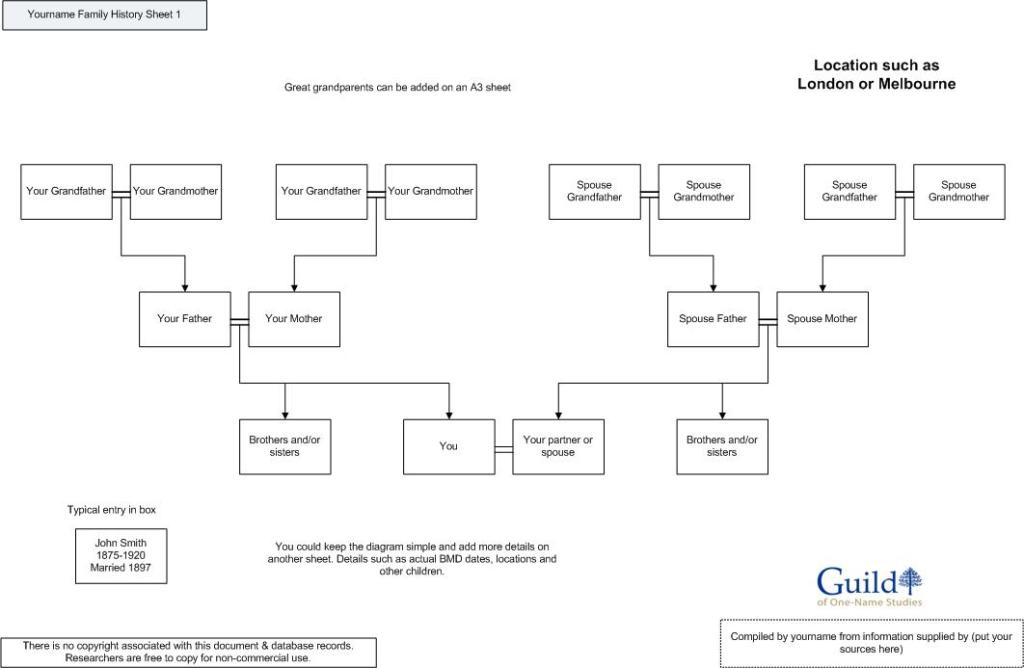
Sketch out your family at the bottom of the sheet; add your parents and your partners (if applicable). Add your siblings with lines joining them all together, to each of your parents. You can add your two sets of grandparents and join them all together as per the diagram below.

The next step is to talk to your parents and grandparents and record their history. You will be shown old photographs and documents so try to copy these. Some will talk freely and some will be reluctant to talk – you just have to be a good listener while giving gentle prompts. You may be told things that they don’t want other family members to hear about so be aware that some memories may not always be happy ones.

You may not know your grandparents or you may want to go further back in time. You can use FreeBMD to find any birth, marriage or death from around 1975 back to the September quarter 1837. You will see a reference against these records from which you can order certificates from the gov.uk website; these are around £11 but you only need these to prove a difficult connection. Be aware that in the 1840s there was a scandal when some unscrupulous registrars were found to have made up birth & deaths in order to obtain a bonus. This scheme was discontinued when it was found that there had been almost a doubling of false registrations. The first case of false recording occurred in 1846 and we assume that after this date the malpractice stopped. FreeBMD have another facility for limited parish records and census returns. Type FreeBMD into any search engine and you will find the site.

Another free site is the General Register Office (GRO) where you can find the mother’s maiden name against births from 1837 to 1934. There are some mother’s names omitted and you have to register but it is a great tool for finding the children of a married couple.

The other free website is FamilySearch and you have to register your details. These same BMD records are available, in additional to census and parish records. Be aware that some of the submitted family trees lack rigorous construction. You can submit your own family tree on this site but deceased ancestors are available for everyone to see and modify.

Another misconception you may come across is that you must have a program to record your family names, especially if your tree starts to grow. You can use a simple spreadsheet available on most computer Microsoft Office packages. You can even do a family tree diagram in Excel with a bit of practice. Alternatively, you can simply draw your names out on an A3 sheet which will cost almost nothing. The most important thing is to interview all your relatives and record as much of their memories as possible before they disappear forever.

Finally, and most important of all, record your sources of information. So many family trees in FamilySearch and Ancestry have no sources and you need to treat these with caution.